Facial Bo-jin in Orchard, Singapore: What It Is, How It Differs from Gua Sha and Acufacial
Facial bo-jin (面部拨筋) is a manual facial technique: firm, controlled strokes with the fingers or a smooth tool, worked across the facial muscles and the tissue around them. At RP Clinic, #04-01, TANGS at Tang Plaza, 310 Orchard Road, Singapore, directly above Orchard MRT, bo-jin can be booked on its own, with a first session at $88 nett (GST included), or added to an Acufacial session. Acufacial is facial acupuncture by a registered TCM physician, using ultra-fine SEIRIN® needles from Japan, 0.10 mm in diameter.
This article explains what bo-jin involves, what it feels like, how it differs from gua sha and from Acufacial, who should not have it, and the aftercare.
What is facial bo-jin (面部拨筋)?
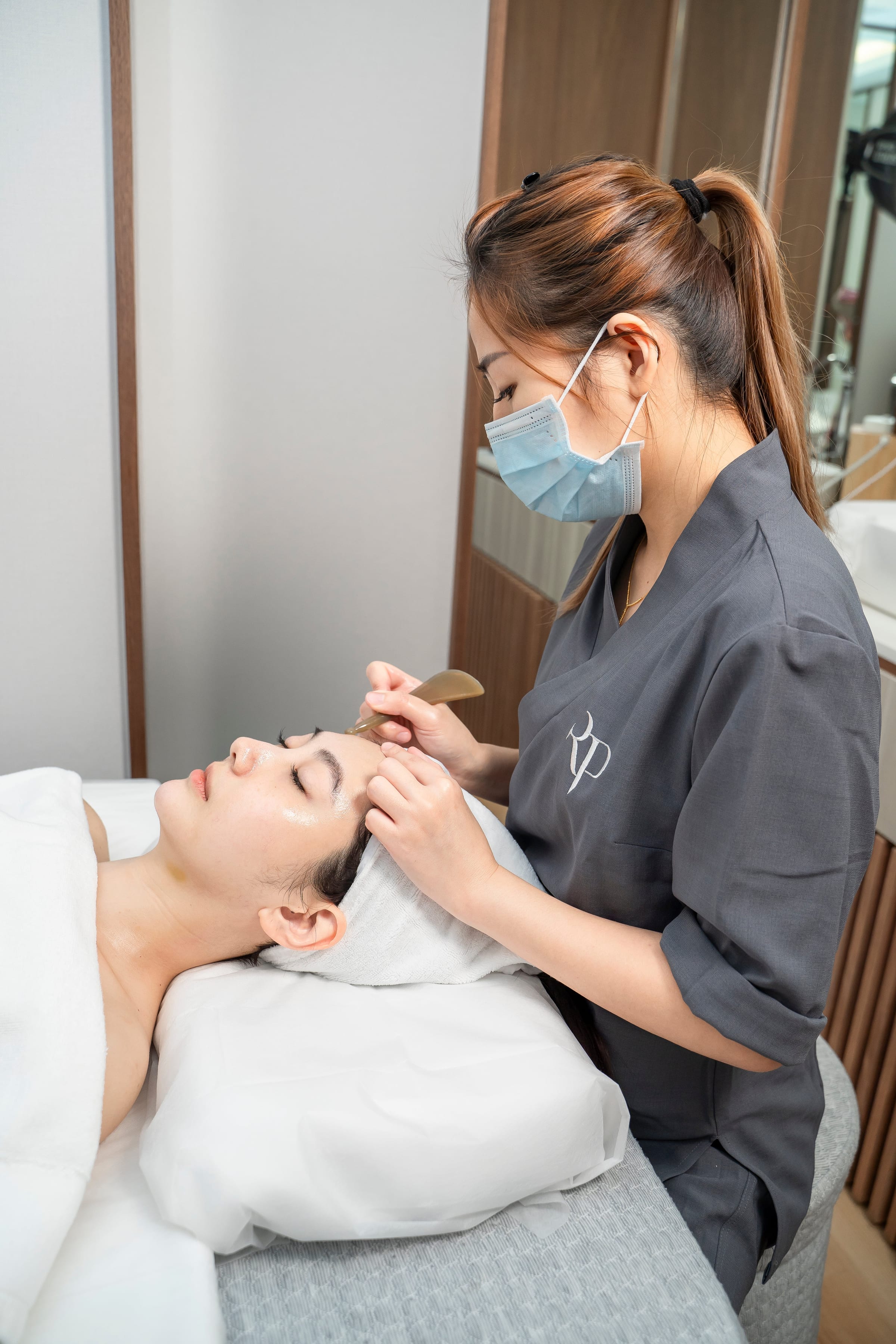
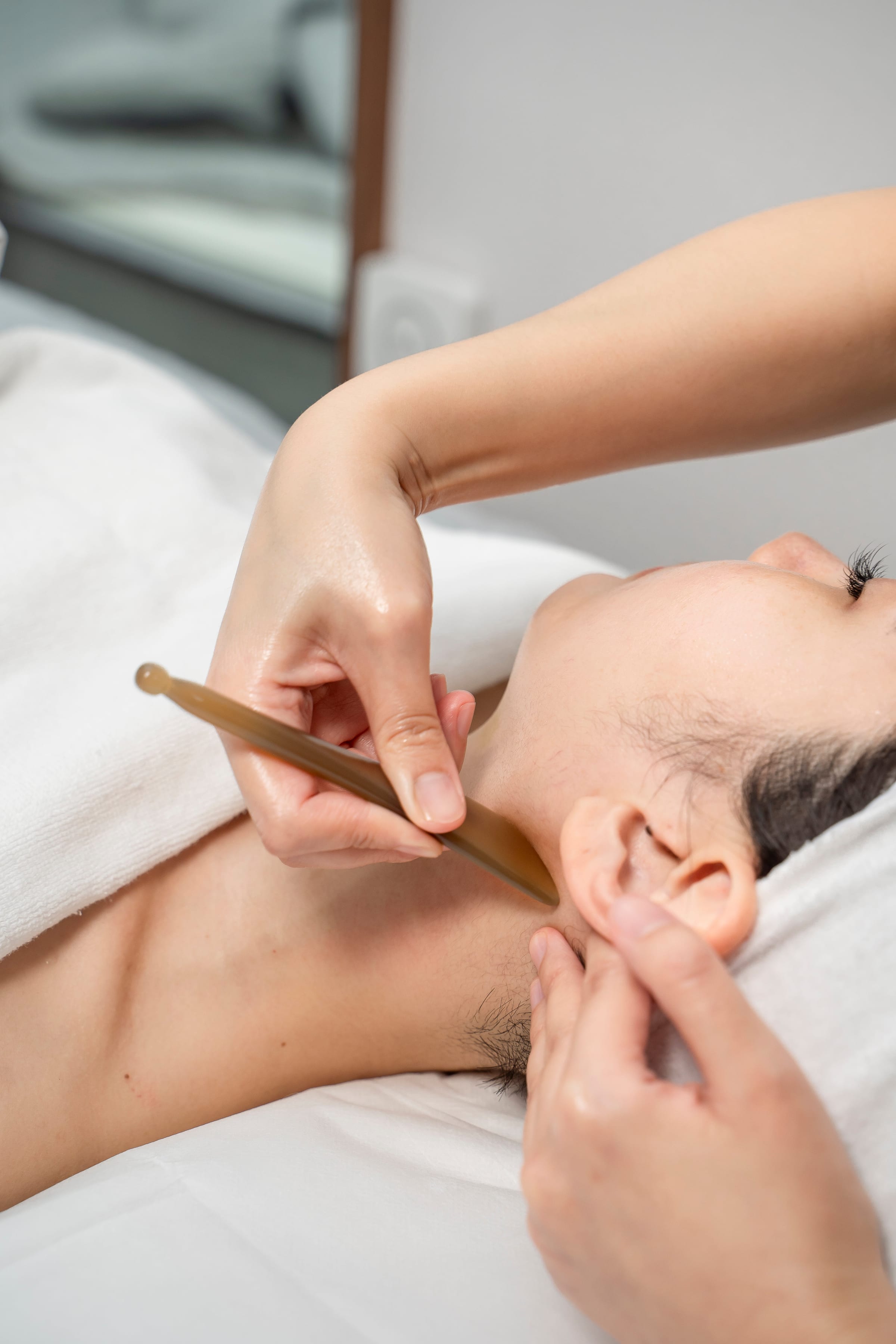
Bo-jin (拨筋) is a hands-on technique. 拨 means to pluck or move across, and 筋 refers to the muscles and the tissue around them. On the face, the strokes run across and along the muscles at the brow, the cheekbone, the jaw and the temples. The pressure is firm and controlled, and the strokes are made with the fingers or with a smooth tool, often made of horn or stone.
The plucking stroke (拨法) is also one of the hand techniques used in tuina. Facial bo-jin applies the same idea to the face, on a smaller scale and with less force.
Why do people choose facial bo-jin?
The most common reasons people ask for bo-jin are:
- A feeling of facial tension, often around the jaw, the brow or the temples
- Puffiness, especially in the morning or after a late night
- A tired look to the face
- A lifted, more defined look along the jaw and cheekbones
- A slimmer-looking face
Bo-jin is used to de-puff and detox the face, to give a lifted look along the jaw and cheekbones, and to make the face look slimmer and more defined. Many people notice the face feels looser and less puffy straight after a session. Results vary from person to person. Bo-jin does not replace a medical assessment of a skin condition.
What does facial bo-jin feel like?
Bo-jin uses firm pressure. Most people find it relaxing overall, but tight spots, often along the jaw, the cheekbone or the temples, can feel tender while they are worked on. Let us know at any point if the pressure is too much, and it will be adjusted.
Temporary redness on the areas worked is common and settles on its own.
How is bo-jin different from gua sha?
Both can use a smooth tool, so the two are often confused. The main differences are in the strokes and the pressure.
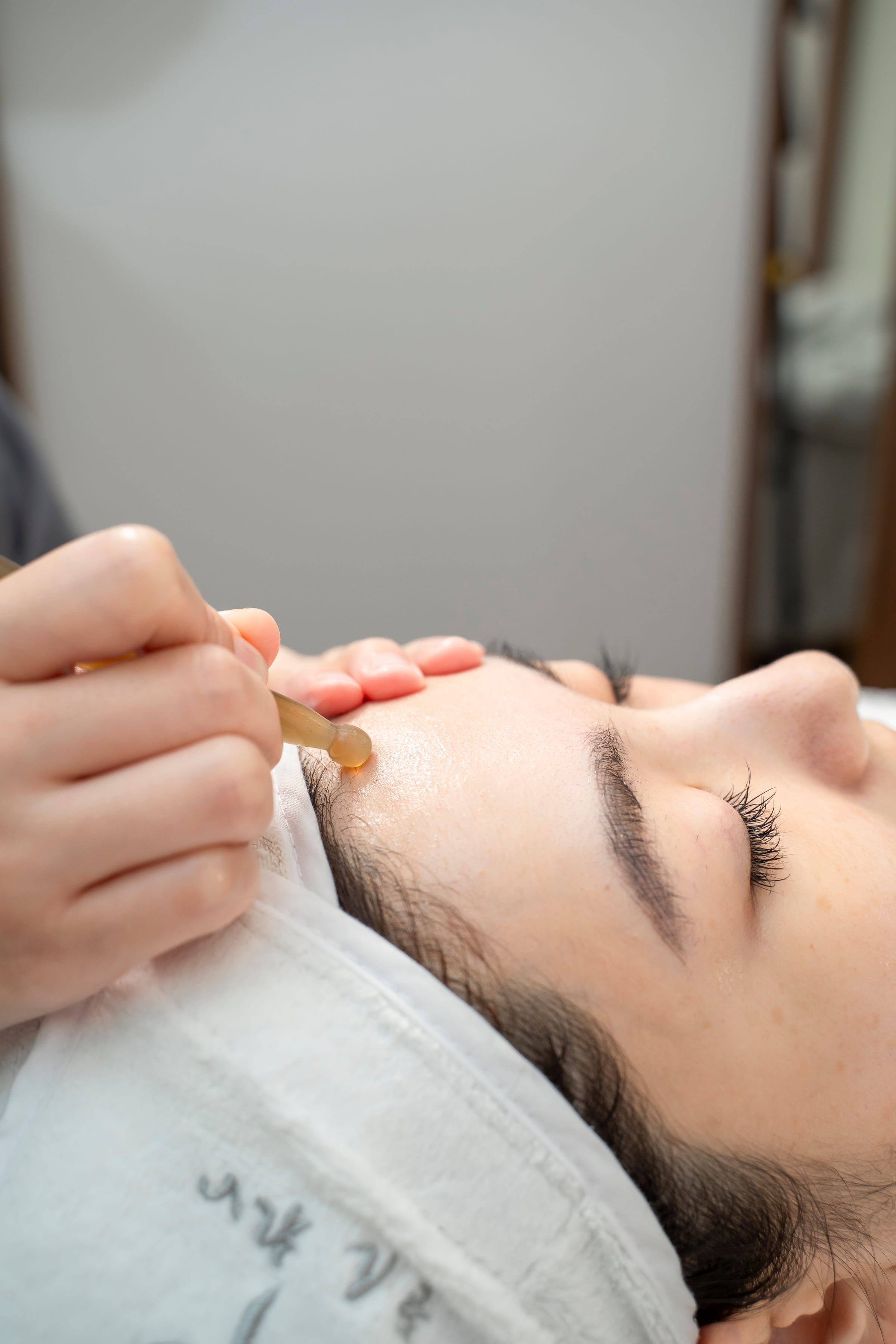
- Gua sha uses broad scraping strokes over oiled skin. On the face, it is usually lighter.
- Bo-jin uses firm, controlled strokes that work across the muscles and the tissue around them, at specific areas such as the brow, cheekbone, jaw and temples. It can also be done with the fingers alone.
How is bo-jin different from Acufacial (facial acupuncture)?
Acufacial uses needles; bo-jin does not.
- Acufacial is facial acupuncture. A registered TCM physician places ultra-fine SEIRIN® needles, 0.10 mm in diameter, at selected points on the face. It is commonly chosen for puffiness, dull tone, fine lines and facial tension. Most people describe a mild tingling or tightness. There is no downtime, and makeup can be applied the next day.
- Bo-jin is done with the hands or a smooth tool on the surface of the skin.
At RP Clinic, bo-jin can be booked on its own, or combined with Acufacial in one session.
What happens when bo-jin is added to Acufacial at RP Clinic?
Let us know when booking that you would like bo-jin added. The session then has two parts.
- Acufacial. The physician takes your history and assesses your face, then places fine SEIRIN® needles at selected points.
- Bo-jin. Firm strokes along the brow, cheekbone, jaw and temples, with the fingers or a smooth tool. Bo-jin takes about 30 minutes, and the pressure is adjusted to you throughout.
Who should not have facial bo-jin?
Suitability is checked at your visit. Bo-jin may not be suitable, or may need to be adjusted or avoided over certain areas, if any of the following apply:
- Broken skin, a wound or a rash on the face
- Inflamed acne or a skin infection on the face
- Sunburn on the face
- Recent facial injectables or filler (please ask us first)
- A tendency to bruise easily, or blood-thinning medication
- Recent facial surgery
- Pregnancy (please let us know when booking)
If you are unsure whether any of these apply to you, message us via WhatsApp before your visit.
What aftercare is needed after facial bo-jin?
For the rest of the day:
- Avoid rubbing or massaging the face firmly
- Avoid saunas, steam rooms and strong exfoliating products
- Apply sunscreen when you go outdoors
When bo-jin is added to Acufacial, makeup can be applied the next day. If you notice bruising, or tenderness that does not settle, please contact us via WhatsApp.
How much does facial bo-jin cost at RP Clinic?
Bo-jin can be booked on its own. A first bo-jin session is $88 nett, GST included.
Bo-jin can also be added to an Acufacial session. For the price of the combined session, message us via WhatsApp at +65 8014 8552.
Where can I get facial bo-jin in Orchard?
RP Clinic is at #04-01, TANGS at Tang Plaza, 310 Orchard Road, directly above Orchard MRT, and is open daily 10:00–20:00. Facial bo-jin can be booked on its own, with a first session at $88 nett, or added to Acufacial, which is performed by a registered TCM physician. To book, message us via WhatsApp at +65 8014 8552.
FAQ
What is the difference between bo-jin and gua sha?
The difference is mainly in the strokes and the pressure. Facial gua sha is broad, usually light scraping over oiled skin; bo-jin is firmer and works across the muscles at specific areas such as the jaw and temples.
Does facial bo-jin hurt?
It can feel tender over tight spots, but most people find it relaxing overall. Tell us at any point if you would like lighter pressure.
How long does facial bo-jin take?
About 30 minutes.
Can I book bo-jin on its own at RP Clinic?
Yes. A first bo-jin session is $88 nett, GST included. Bo-jin can also be added to an Acufacial session.
Will my face be red afterwards?
Possibly, on the areas worked. The redness is temporary and settles on its own.
Can I have bo-jin after filler or other facial injectables?
Please ask us first. Let us know what was done and when, and suitability is checked before bo-jin is added.